Best Rubber Flooring for Home Gym: Mats vs Tiles vs Rolls (2026)
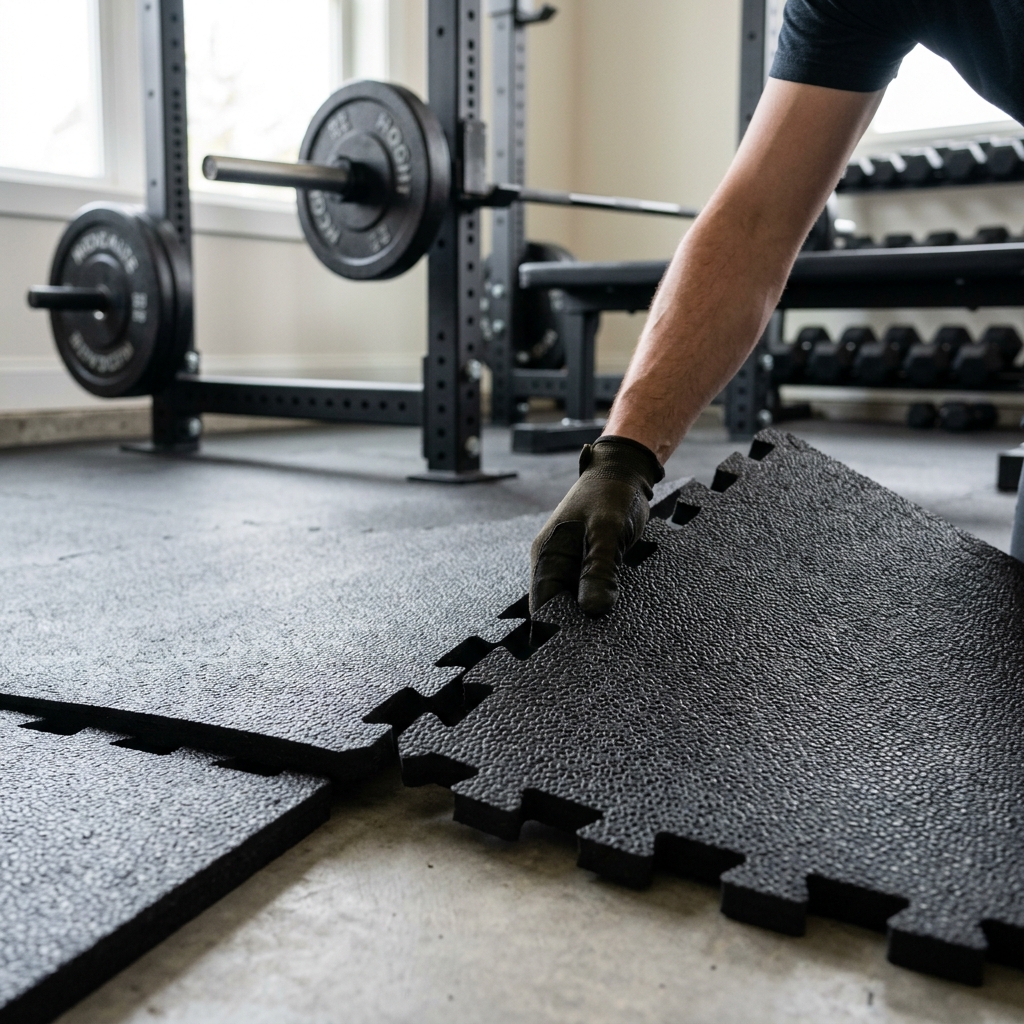
Best Rubber Flooring for Home Gym: Mats vs Tiles vs Rolls
We tested 8 flooring options for durability, noise reduction, stability, and odor. Here's everything you need to know before buying.
Quick Verdict
For most home gyms: Horse stall mats from Tractor Supply ($45 each, 4×6 ft, 3/4" thick) are the undisputed best value. For a finished, professional look: Rubber-Cal Elephant Bark tiles ($3.50/sq ft, 3/8" thick). For deadlift platforms: stack two layers of 3/4" stall mats for maximum impact protection.
3 Types of Rubber Gym Flooring
| Type | Price/sq ft | Thickness | Installation | Best For | Appearance |
|---|---|---|---|---|---|
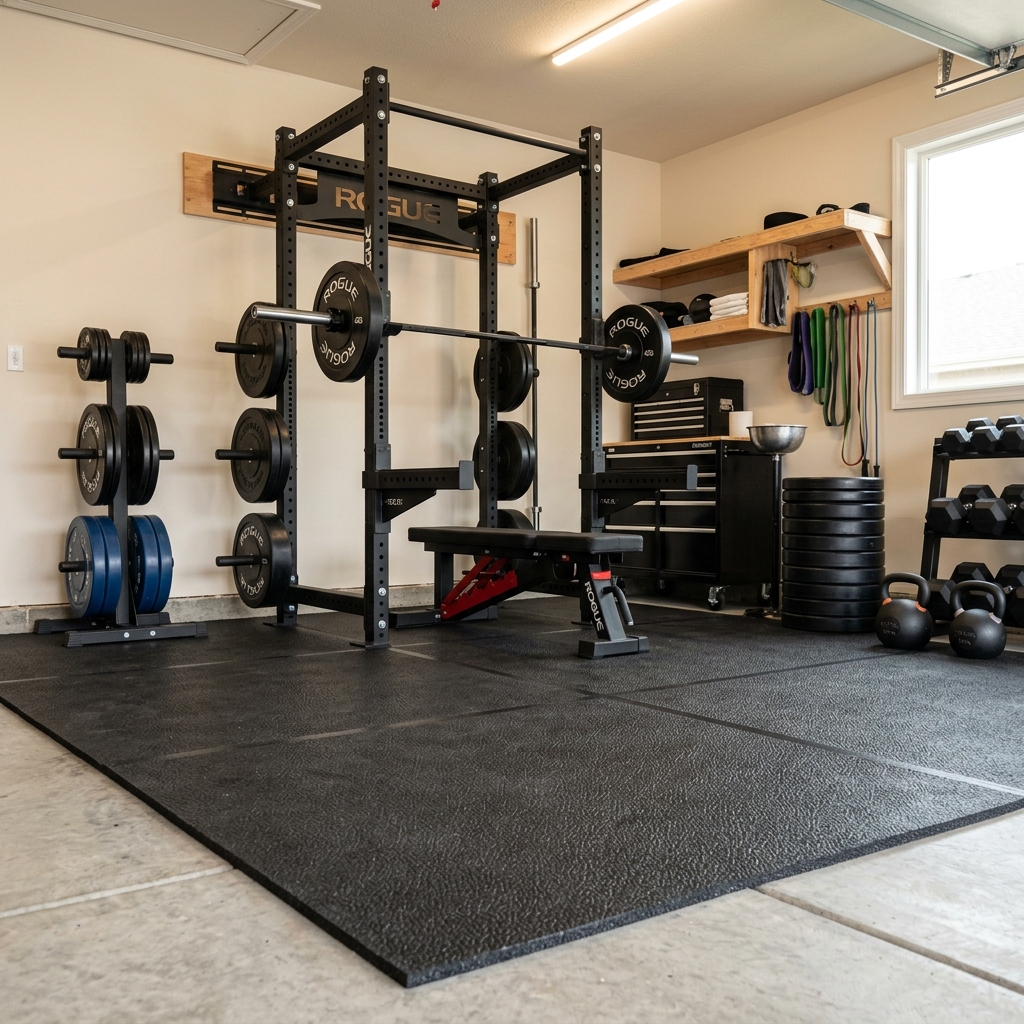
| Stall Mats | $1.88 | 3/4" | Lay flat (no adhesive) | Heavy lifting, garages | Industrial (pebble texture) |
| Interlocking Tiles | $3-5 | 3/8"-1/2" | Puzzle-fit (no adhesive) | Finished rooms, aesthetics | Clean, professional |
| Rubber Rolls | $2-4 | 1/4"-1/2" | Roll out + tape/adhere | Large areas, commercial look | Seamless, uniform |
Best Overall: Horse Stall Mats ($45/mat)
The home gym community's worst-kept secret: 4×6 ft, 3/4" thick recycled rubber mats designed for horse stalls are the best gym flooring value on the planet. At $1.88 per sq ft, they're 40-60% cheaper than branded gym flooring — and actually thicker (3/4" vs. typical 3/8" gym tiles).
Where to buy: Tractor Supply Co (in-store pickup, $44.99 each). Also available at local feed stores and farm supply retailers. They weigh ~100 lbs each, so bring a friend and a truck/SUV.
The rubber smell: New stall mats have a strong rubber odor that fades over 1-3 weeks. Speed up the process: wipe mats with a vinegar-water solution (50/50), set them in direct sunlight for a day, or run a fan in the space for the first week.
Coverage math: Each mat = 24 sq ft. A typical 10×12 ft gym needs 5 mats ($225 total). A 2-car garage gym needs 8-10 mats ($360-$450).
How Thick Should Gym Flooring Be?
1/4" - 3/8"
Adequate for machine-only gyms, light dumbbells, and bodyweight exercises. Will NOT protect against dropped barbells or heavy deadlifts.
3/4" (Recommended)
Handles dropped dumbbells, deadlifts with controlled lowering, and heavy squats. Protects concrete and reduces noise. This is the sweet spot for 90% of home gyms.
1.5"+ (Double Layer)
Required for Olympic lifting where you drop loaded barbells from overhead. Stack two layers of stall mats or build a proper deadlift platform (plywood + rubber).
FAQ
❓Will rubber flooring damage my garage floor?
No — rubber mats protect your concrete from weight impacts, dropped equipment, and scratches. However, rubber can trap moisture underneath on bare concrete. In humid climates, pull up mats every 3-6 months to check for moisture. If the concrete sweats, apply a concrete sealer first or place a vapor barrier (6 mil poly sheeting, $25 per roll) underneath.
❓Can I put rubber gym flooring over carpet?
We don't recommend it for heavy lifting. Carpet compresses under rubber mats, creating an unstable surface. For light exercises (dumbbells, bodyweight), it's acceptable. For a rack or heavy lifting, remove the carpet first or choose a different room with a hard floor.
📚 Continue Reading
Explore more expert guides from our fitness lab: