Home Gym Flooring Guide: Every Option Ranked by Durability & Price (2026)
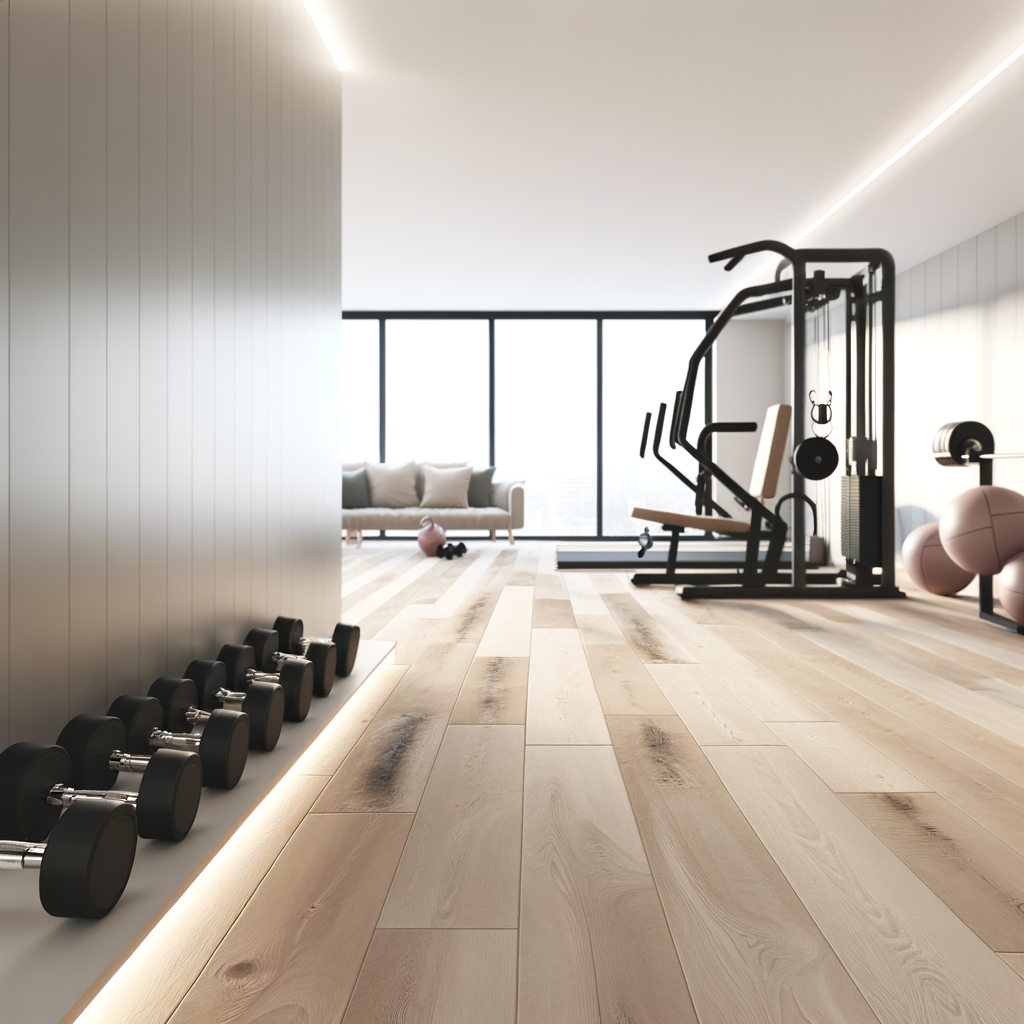
Home Gym Flooring Guide: Every Option Ranked (2026)
The foundation of every home gym. Wrong flooring choice = cracked concrete, damaged equipment, noise complaints, and wasted money. Here's how to get it right.
Why Gym Flooring Matters
Dropping a 45-lb plate on bare concrete generates roughly 10,000 lbs of force at the point of impact. That's enough to crack concrete, damage weight plates, and send shockwaves through your house. Proper gym flooring absorbs impact, reduces noise by 50-80%, protects your subfloor, and provides stable footing for heavy lifts. It's the first thing you should buy — before any equipment.
All Flooring Options Compared
| Type | Cost/sq ft | Thickness | Durability | Noise Reduction | Best For |
|---|---|---|---|---|---|
| Horse Stall Mats | $1.50-2.50 | 3/4" | Excellent (10+ yrs) | Very Good | Best overall value |
| Rolled Rubber | $1.75-3.50 | 3/8-1/2" | Excellent | Good | Seamless coverage |
| Rubber Tiles (interlocking) | $2.00-4.00 | 3/8-3/4" | Very Good | Good | DIY install, clean look |
| EVA Foam Tiles | $1.00-2.00 | 1/2-3/4" | Fair (2-4 yrs) | Good | Light exercise, yoga |
| Vinyl Plank (LVP) | $2.50-5.00 | 5-8mm | Good | Fair | Studio-look gym |
| Plywood + Rubber | $3.00-5.00 | 1.5"+ total | Excellent | Excellent | Deadlift platforms |
| Carpet Tiles | $0.50-1.50 | 1/4" | Poor | Fair | Cardio only (not recommended) |
Our Top Pick: Horse Stall Mats
The undisputed champion of home gym flooring. Horse stall mats (available at Tractor Supply Co. for ~$45-50 per 4x6 ft mat) offer 3/4-inch solid rubber at roughly $1.50-2.00 per square foot. That's the same material used in commercial gym flooring but at 1/3 of the branded price.
Why they work: 3/4" of solid rubber absorbs heavy drops without compressing, provides stable footing for squats and deadlifts, and lasts 10+ years with zero maintenance. They're designed to handle 1,200-lb horses stomping on them all day — a 400-lb deadlift is nothing.
The downside: They smell like rubber for 2-4 weeks after installation (off-gassing). The smell dissipates completely with ventilation. They're also heavy — each 4x6 mat weighs ~100 lbs, so plan your transport carefully. Finally, the edges don't interlock, so mats can shift slightly under lateral movements. Solution: butt them tight together and use double-sided tape on the seams.
Coverage calculator: A standard 10x10 ft gym area needs 4 mats (4x6 ft each = 96 sq ft coverage). Total cost: ~$180-200. That's less than a single month of some gym memberships.
Flooring by Gym Type
Garage Gym (Heavy Lifting)
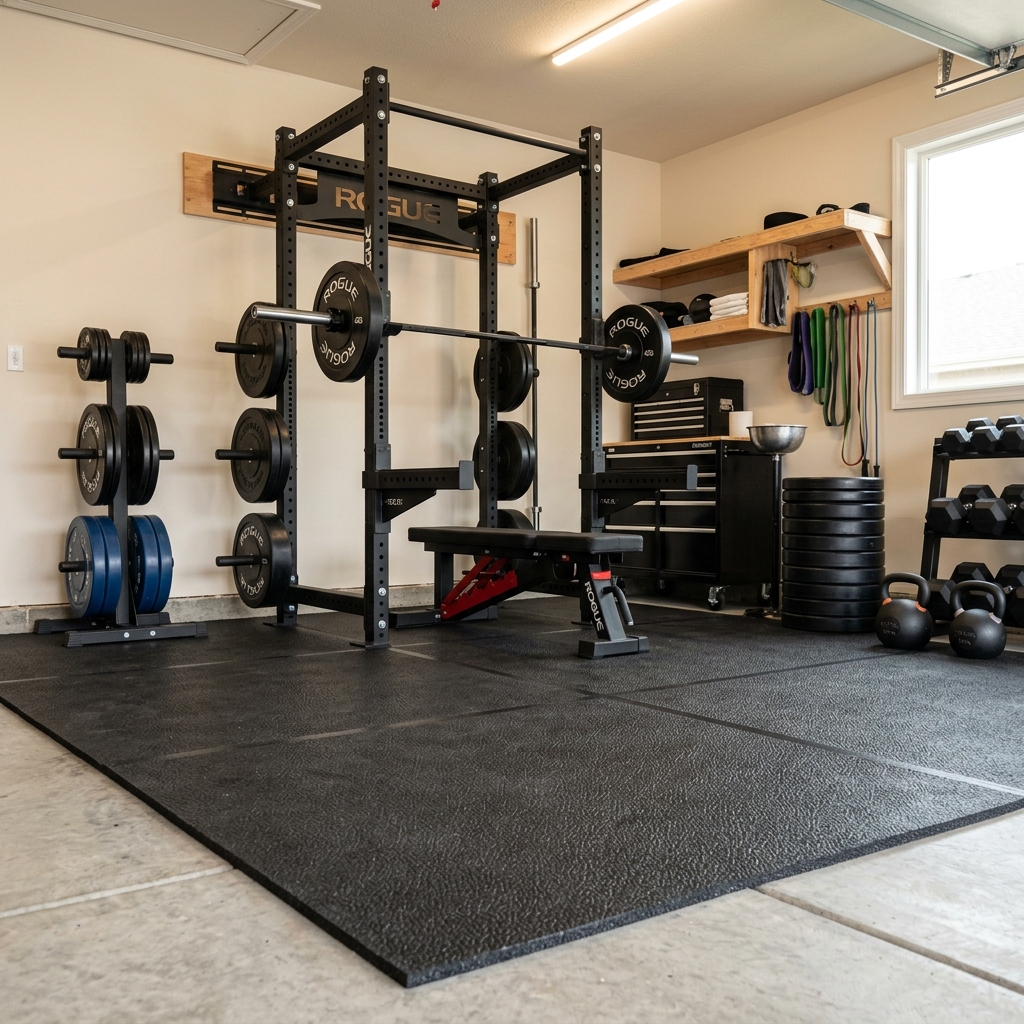
Horse stall mats (3/4") directly on concrete. Add a deadlift platform (plywood sandwich) if you drop heavy weights. Budget: $180-300 for a 10x10 area.
Best: Stall mats + plywood platform
Spare Room Gym
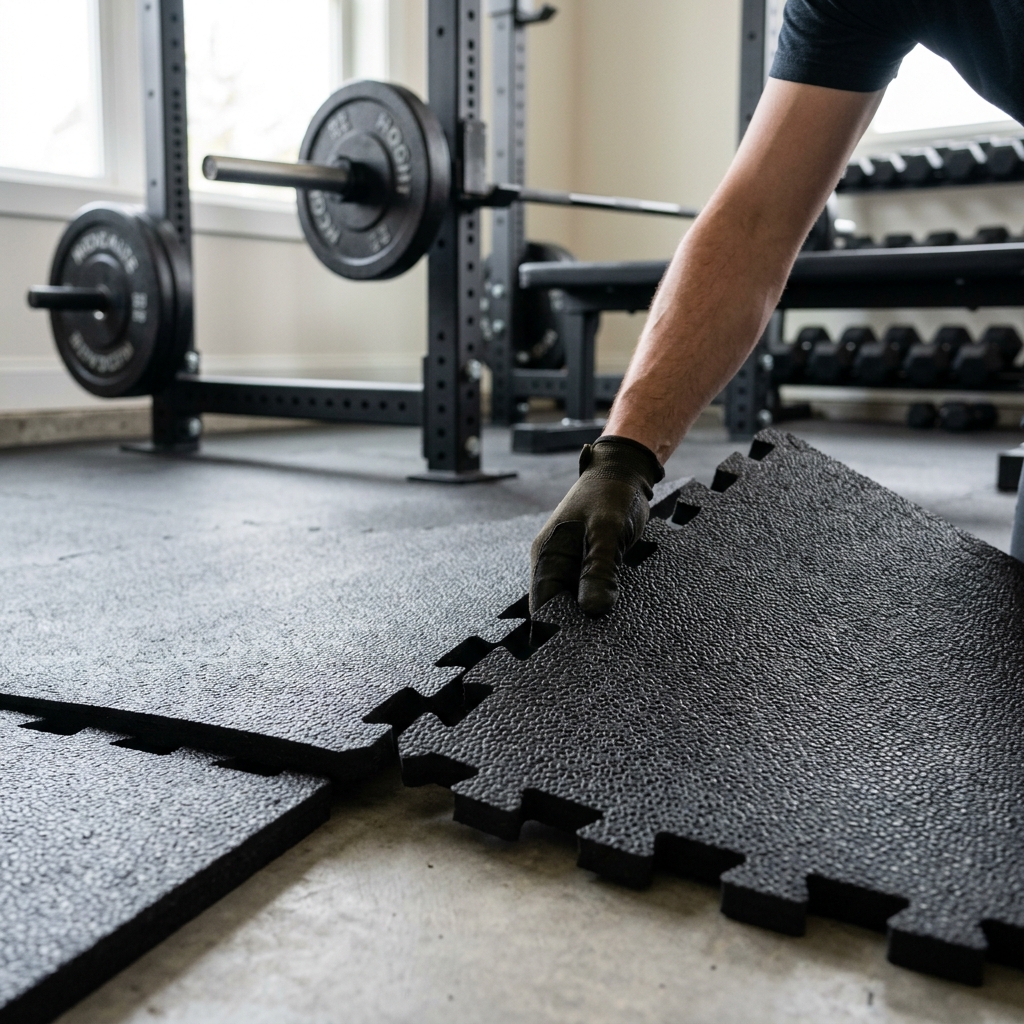
Interlocking rubber tiles (3/8-1/2") over existing flooring. Clean look, easy to remove if renting, protects hardwood underneath. Budget: $200-400 for 10x10.
Best: Rubber interlocking tiles
Yoga/Cardio Space
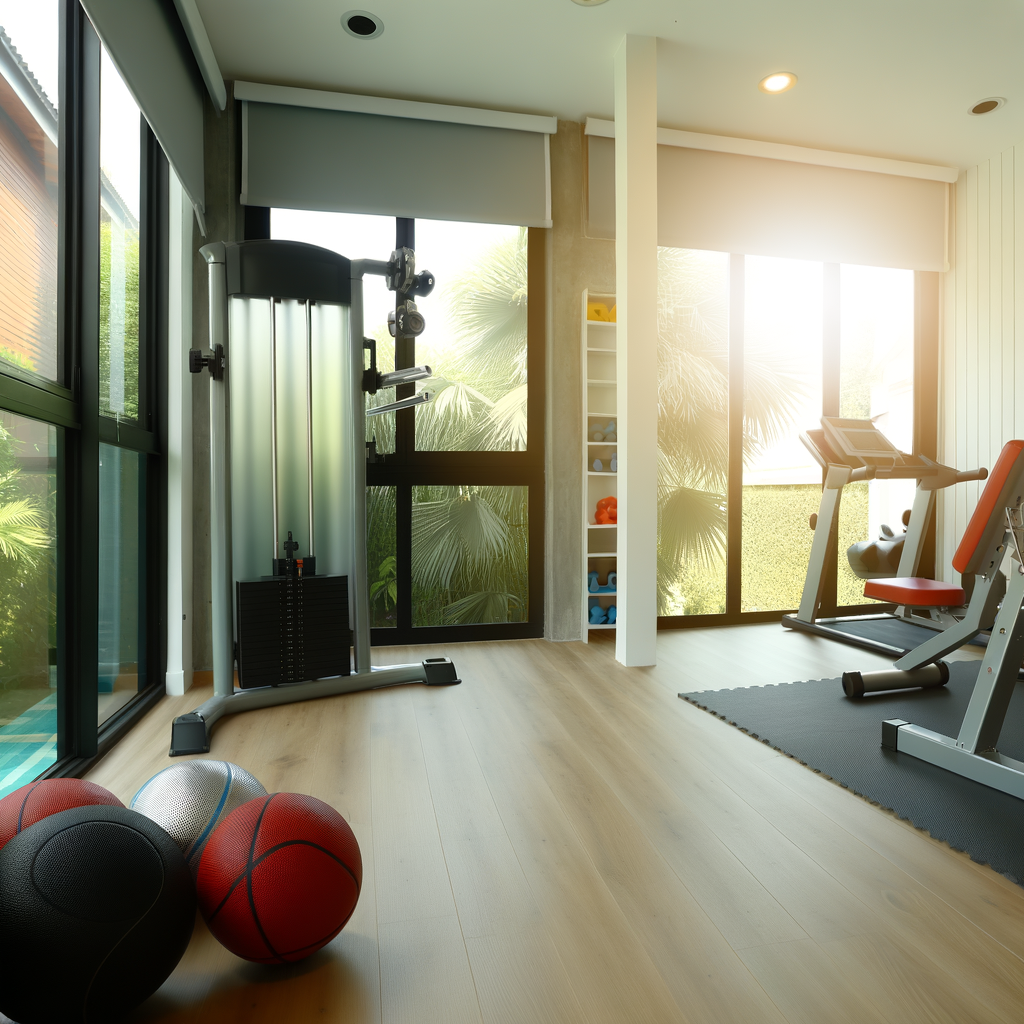
EVA foam tiles or a quality yoga mat. No heavy impact to absorb, so foam's lower durability isn't an issue. Budget: $50-120 for 8x8 area.
Best: EVA foam or cork tiles
Installation Tips
- Clean the subfloor first. Sweep and mop thoroughly. Debris under rubber mats creates uneven spots and can damage your subfloor over time.
- Let stall mats off-gas outdoors. Unroll them in the sun for 2-3 days before bringing them inside. This dramatically reduces the rubber smell.
- Cut with a utility knife. Rubber mats cut easily with a sharp box cutter. Score the top, flip, and snap. Use a straight edge for clean cuts.
- Don't glue to the floor. Unless you're certain the gym is permanent. Rubber mats are heavy enough to stay in place. Gluing makes future removal nearly impossible.
- Address moisture first. On concrete, test for moisture (tape plastic sheeting to floor for 24 hours — if condensation appears underneath, you have a moisture issue). Use a vapor barrier before laying rubber.
FAQ
❓How thick should home gym flooring be?
For heavy weightlifting (deadlifts, Olympic lifts): 3/4" minimum. For general strength training (dumbbells, machines): 3/8-1/2" is sufficient. For cardio and yoga: 1/4-3/8" works fine. Thicker is always better for noise reduction and impact protection, but the returns diminish beyond 3/4" for most home gym uses.
❓Where do you buy horse stall mats for a gym?
Tractor Supply Co. is the most popular source — they sell 4x6 ft, 3/4" mats for $45-50 each. You can also find them at farm supply stores and some Home Depot locations. Call ahead to confirm stock. They're heavy (100 lbs each), so bring a truck or SUV and someone to help load.
📚 Continue Reading
Explore more expert guides from our fitness lab: