Best Home Gym Flooring Over Concrete: 6 Options Compared (2026)
Best Home Gym Flooring Over Concrete: 6 Options Ranked (2026)
Concrete is the best foundation for a gym floor — if you install the right surface on top. Here are your 6 best options.
Key Insight
Concrete is actually ideal for a gym floor — it's flat, solid, and handles unlimited weight. Your flooring's job is protection (knees, equipment, concrete surface) and grip, not structural support. This means you don't need expensive solutions — even $1/sq ft stall mats work perfectly for most setups.
All 6 Options Compared
| Flooring Type | Cost/sq ft | Thickness | Best For | Rating |
|---|---|---|---|---|
| Horse Stall Mats | $1.00-1.50 | 3/4" | Best value overall | 4.7/5 🏆 |
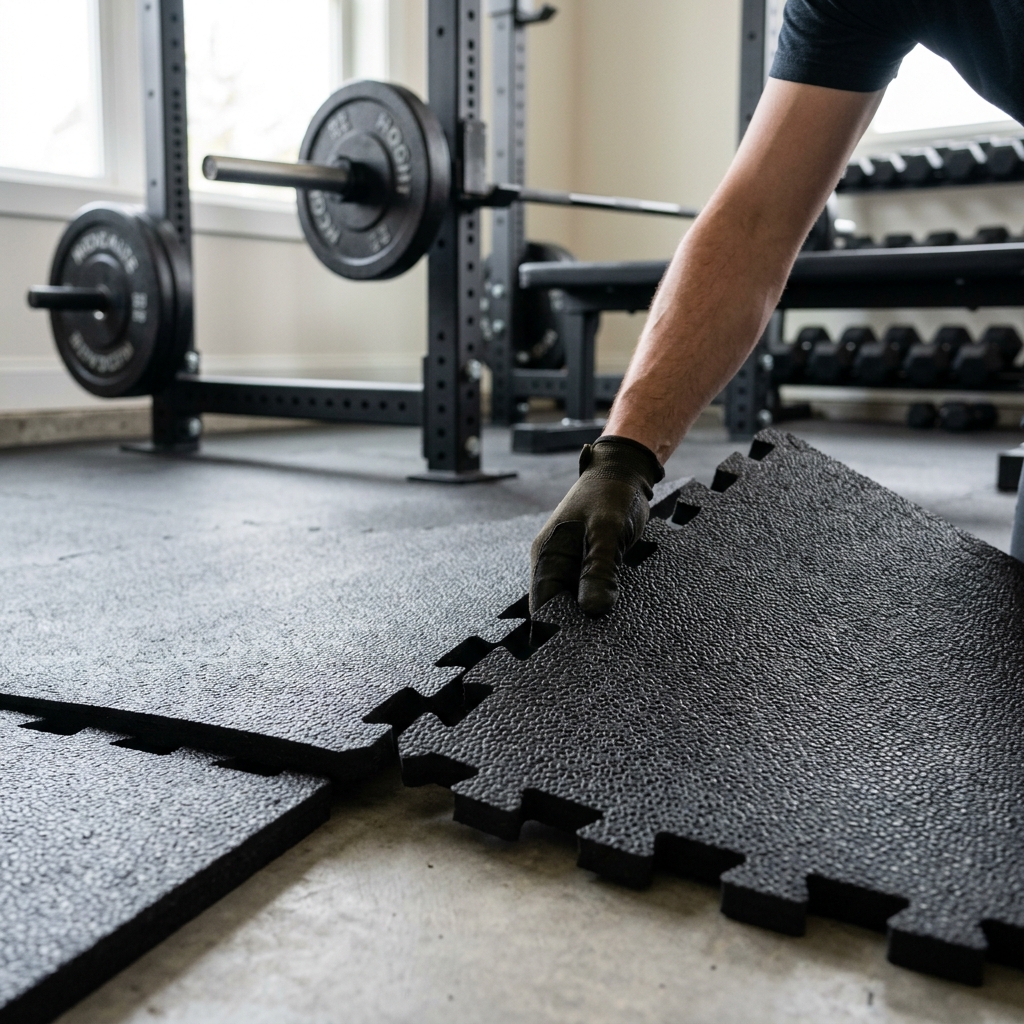
| Interlocking Rubber Tiles | $2.50-4.00 | 3/8"-3/4" | Clean look, easy install | 4.5/5 |
| Rolled Rubber | $1.50-3.00 | 1/4"-3/8" | Wall-to-wall coverage | 4.4/5 |
| EVA Foam Tiles | $1.00-2.00 | 1/2"-3/4" | Bodyweight, yoga | 3.5/5 |
| Vinyl Plank | $2.00-5.00 | 5-8mm | Dual-purpose rooms | 3.0/5 |
| Epoxy Coating | $3.00-7.00 | 1-3mm | Cardio-only garages | 2.5/5 |
The #1 Pick: Horse Stall Mats
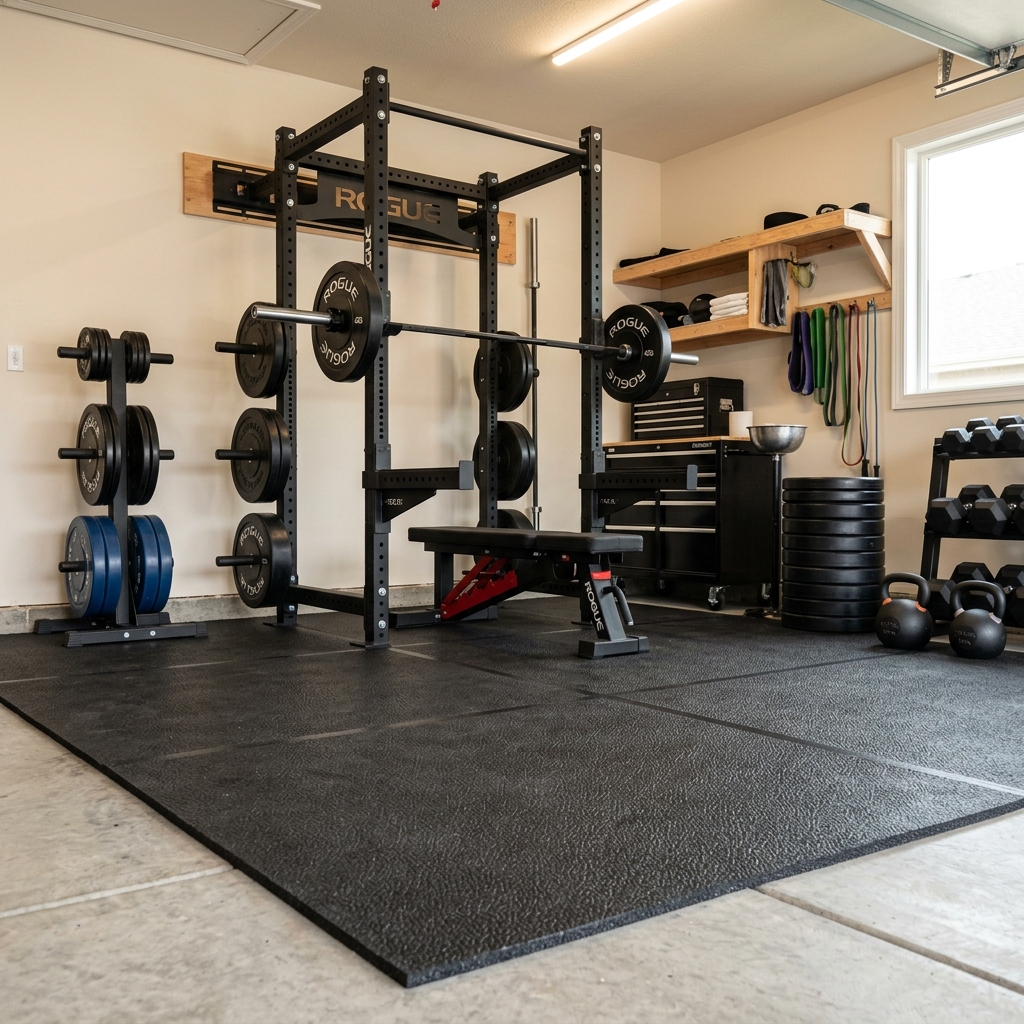
The overwhelming winner for home gym flooring over concrete. Tractor Supply Co. sells 4x6 ft, 3/4" thick rubber stall mats for ~$45 each. At ~$1.12/sq ft, they're the cheapest quality option. They handle dropped barbells, protect concrete, last 20+ years, and require zero maintenance.
The rubber smell: Yes, new stall mats smell strongly of rubber for 2-4 weeks. Solutions: leave them in the sun for a day before installing, ventilate the space, or clean with vinegar. The smell eventually dissipates completely.
Installation on concrete: Just lay them down flat — no adhesive needed. The 100 lb weight keeps them in place. Butt the edges together and you're done. Total install time for a 10x12 ft space: 20 minutes.
Moisture Warning: The Concrete Problem
Concrete absorbs and releases moisture. If your garage or basement has moisture issues, rubber flooring can trap it underneath, causing mold. Before installing any gym floor on concrete:
- Tape a plastic sheet to the concrete for 24 hours. If moisture forms underneath, you have a vapor issue.
- Apply a concrete sealer ($30) before laying rubber mats.
- Run a dehumidifier in humid climates.
- Leave a 1/4" gap around the room edges for airflow.
FAQ
❓Should I glue gym flooring to concrete?
No. Rubber stall mats are heavy enough (100+ lbs each) to stay in place without adhesive. Gluing makes them permanent and impossible to clean underneath. Interlocking tiles lock together by design. Only rolled rubber sometimes benefits from adhesive at the seams — and even then, double-sided tape works fine.
❓How thick should gym flooring be over concrete?
3/4" is the sweet spot. It's thick enough to protect concrete from dropped weights (up to ~300 lbs), absorb impact on joints, and provide a stable surface for squats and deadlifts. Thinner mats (3/8") work for cardio and machines but won't survive heavy barbell drops. Thicker mats (1.5"+) are unnecessary unless you're doing Olympic lifting.
📚 Continue Reading
Explore more expert guides from our fitness lab: