WaterRower Home Rowing Machine Review: Natural vs Classic (2026)
WaterRower Home Rowing Machine: Complete Review (2026)
The rowing machine that looks like furniture. But does the WaterRower's water resistance actually deliver a better workout than magnetic or air competitors?
What Makes WaterRower Different
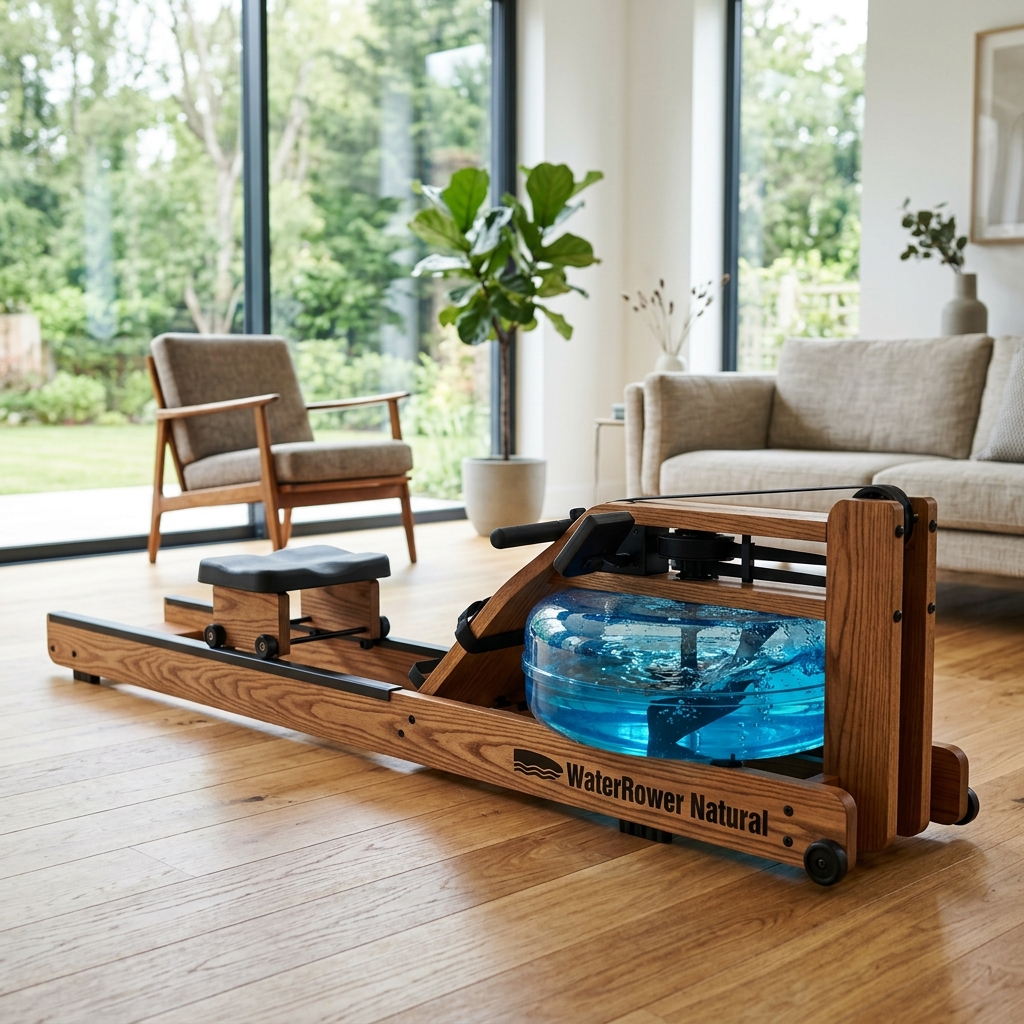
While most rowing machines use air fans (Concept2) or magnetic resistance, the WaterRower uses a dual-paddled impeller spinning in a water tank. The resistance is generated by water drag — pull harder, more resistance; pull slower, less resistance. This creates the most natural-feeling rowing experience of any home rower, closely mimicking the feel of rowing on actual water. The sound of water whooshing is also uniquely pleasant compared to the harsh fan noise of air rowers.
WaterRower Model Comparison
| Model | Price | Material | Best Feature | Rating |
|---|---|---|---|---|
| Natural (Ash wood) | $1,195 | American ash | Beautiful wood grain, living room-worthy | 4.7/5 |
| Classic (Walnut) | $1,395 | Black walnut | Premium dark wood, patinas over time | 4.7/5 |
| M1 HiRise | $999 | Aluminum + ash | Elevated seat (easier entry) | 4.5/5 |
| A1 GX | $899 | Aluminum | Most affordable WaterRower | 4.4/5 |
WaterRower vs Concept2: The Real Comparison
| Feature | WaterRower Natural | Concept2 Model D |
|---|---|---|
| Price | $1,195 | $990 |
| Resistance Type | Water (natural feel) | Air (consistent) |
| Sound | Soothing water whoosh | Loud fan noise |
| Looks | Furniture-grade wood | Industrial/gym look |
| Performance Monitor | S4 (basic) | PM5 (gold standard) |
| Workout Tracking | Basic apps | ErgData, Concept2 logbook |
| Community | Small | Massive (racing, challenges) |
| Storage | Stores upright (small footprint) | Splits in two (still large) |
| Durability | 10-20 years | 20+ years |
| Best For | Home aesthetics, enjoyable rowing | Serious training, performance tracking |
The honest truth: The Concept2 is the better training tool — superior monitor, massive community, standardized competition data. The WaterRower is the better living room piece — gorgeous design, quieter operation, stores upright. If you row for performance: Concept2. If you row for fitness and want equipment that enhances your home: WaterRower.
Water Resistance: How It Feels
The WaterRower's resistance curve is inherently progressive — the faster you pull, the more resistance the water creates. This perfectly mimics real rowing on water, where pulling harder through the water generates more drag. There's no need to adjust resistance levels; the machine self-adjusts to your effort.
You CAN change the resistance range by adding or removing water from the tank. More water = heavier base resistance. The sweet spot is 17 liters (the factory recommendation). Going below 14 liters makes the catch feel empty; above 20 liters makes recovery sluggish.
The sound: This is the WaterRower's secret weapon. The rhythmic swooshing of water is genuinely pleasant — almost meditative. Compare this to the Concept2's hair-dryer-like fan noise, and you understand why WaterRower owners consistently report longer, more enjoyable rowing sessions.
FAQ
❓Does the WaterRower need maintenance?
Very little. Add a water purification tablet every 6 months to prevent algae growth in the tank. That's it. No belts to replace, no chains to oil, no fans to clean. The wood frame benefits from occasional oiling (Danish oil, once a year) to maintain its luster. The tank is sealed — water doesn't need to be changed unless it becomes discolored.
❓Is the WaterRower worth it over the Concept2?
It depends on your priorities. If you want the best performing rower with the best tracking and community: Concept2 wins. If you want the best-looking rower that sounds pleasant and stores upright in a living room: WaterRower wins. Both provide an excellent full-body workout. The WaterRower costs $205 more (Natural vs Model D) — that premium buys you aesthetics and quieter operation, not better exercise.
📚 Continue Reading
Explore more expert guides from our fitness lab: