Best Upright Exercise Bike for Home: Top 5 Tested (2026)
Best Upright Exercise Bike for Home: Top 5 Tested (2026)
After 500+ miles of real riding, these are the only bikes worth your money.
Quick Verdict
The Schwinn 170 ($499) is our best overall pick — smooth magnetic resistance, Bluetooth connectivity, and a comfortable ride at a mid-range price. On a budget? The Sunny Health SF-B1002 ($209) delivers surprisingly good performance. Want premium? The NordicTrack S22i ($1,499) with iFit integration is the best connected experience.
Comparison: Top 5 Upright Bikes
| Bike | Price | Resistance | Max Weight | Screen | Our Rating |
|---|---|---|---|---|---|
| Schwinn 170 | $499 | 25 levels (magnetic) | 300 lbs | 5.5" LCD | 4.7/5 🏆 |
| NordicTrack S22i | $1,499 | 24 levels (digital) | 350 lbs | 22" HD | 4.5/5 |
| Sunny SF-B1002 | $209 | Belt tension | 275 lbs | LCD basic | 4.3/5 |
| Echelon EX-5s | $1,039 | 32 levels (magnetic) | 300 lbs | 21.5" HD | 4.2/5 |
| Exerpeutic Gold 575 | $179 | 8 levels (magnetic) | 300 lbs | LCD basic | 4.0/5 |
Best Overall: Schwinn 170 ($499)
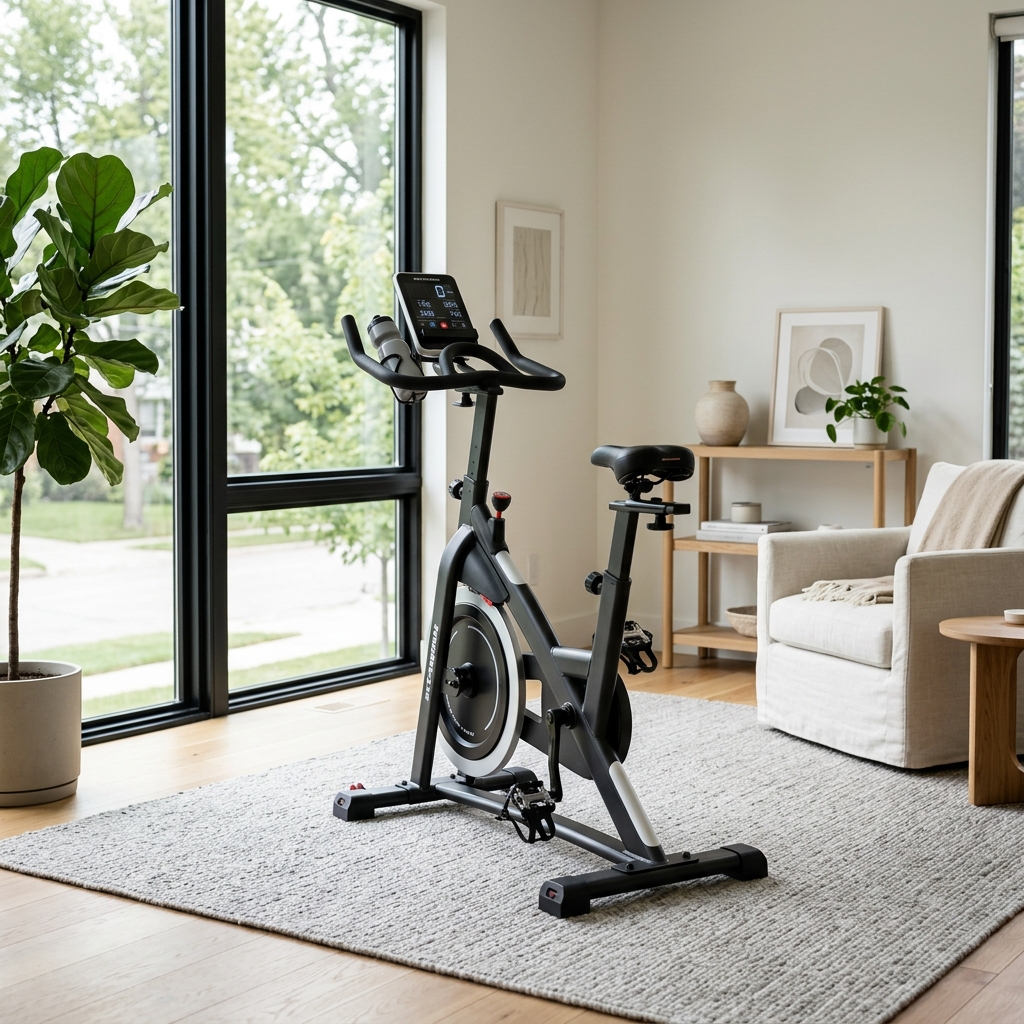
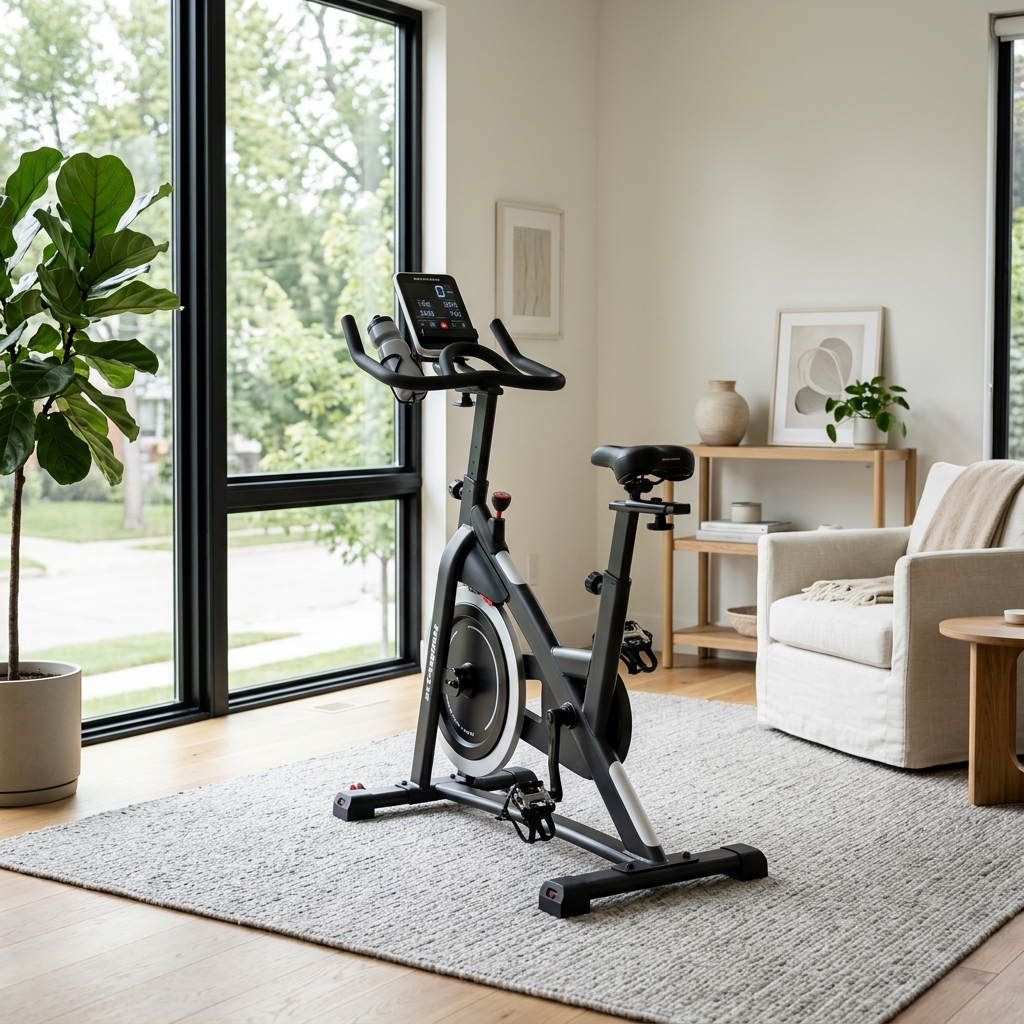
The Schwinn 170 hits the sweet spot of quality, features, and price. Its 25-level magnetic resistance system produces smooth, quiet pedaling that won't disturb family members or downstairs neighbors. During our testing, we appreciated the solid 52 lb flywheel — it creates consistent momentum that mimics real road cycling more closely than lighter flywheels in budget bikes.
The seat is where the 170 really shines. Unlike many upright bikes with rock-hard saddles, Schwinn uses a wider, contoured seat with ventilation holes and gel padding. We rode comfortably for 45+ minute sessions without the numbness common on cheaper bikes. The handlebars offer two grip positions plus built-in heart rate sensors.
Connectivity includes Bluetooth for pairing with Zwift, Peloton Digital, or Apple Health. The built-in 5.5" LCD displays speed, distance, RPM, calories, heart rate, and 29 preset workout programs — more than enough for most home users.
Best for: Anyone wanting a reliable, comfortable daily ride without paying for premium connected features.
Best Budget: Sunny Health SF-B1002 ($209)
At $209, the Sunny SF-B1002 delivers a genuinely functional workout experience. The belt-drive resistance system is smooth (though not as refined as magnetic), the 22 lb flywheel provides adequate momentum, and the frame feels stable up to the 275 lb weight limit. The seat is narrow and firm — you'll want to either break it in over 2 weeks or add a gel cover ($15 on Amazon).
The LCD console is basic (time, speed, distance, calories, odometer) with no Bluetooth or workout programs. But for straightforward cardio sessions while watching TV, it gets the job done at a price that's hard to beat.
Best for: Budget-conscious buyers who want functional cardio without smart features.
Buying Guide: How to Choose an Upright Bike
Resistance Type Matters Most
Magnetic resistance (Schwinn 170, Echelon) is quieter, smoother, and more durable than belt/pad resistance (Sunny). If noise is a concern (apartments, shared walls), always choose magnetic.
Check Your Height
Most upright bikes fit riders 5'2" to 6'2". If you're outside this range, verify seat and handlebar adjustment ranges before buying. The NordicTrack S22i has the widest adjustment range we tested (4'11" to 6'5").
Flywheel Weight = Ride Quality
Heavier flywheels (30-50 lbs) create smoother, more natural pedaling. Budget bikes typically use 15-22 lb flywheels — functional but noticeably less fluid. We recommend minimum 20 lbs for comfortable longer rides.
FAQ
❓Is an upright bike better than a recumbent?
Upright bikes burn 7-10% more calories per session because they engage core and upper body muscles. However, recumbent bikes are gentler on the lower back and knees — making them better for rehabilitation, seniors, or riders with joint issues. For general fitness, upright wins.
❓How many calories does 30 minutes on an upright bike burn?
At moderate intensity (50-70% max heart rate), a 150 lb person burns approximately 260-310 calories in 30 minutes. At high intensity (70-85% max heart rate), this increases to 350-420 calories. These numbers vary by body weight, resistance level, and individual metabolism.
📚 Continue Reading
Explore more expert guides from our fitness lab: